Have you ever wondered what people thought the future would look like a century ago? Spoiler alert: It’s full of flying cars, robot maids, and a strange amount of optimism about technology. As we jump into the quirkiness of past predictions, you’ll find a blend of hilarity and foresight that might just inspire you, or make you chuckle. Strap in as we take a humorous yet insightful journey through time, assessing how yesterday’s visionaries saw tomorrow.
The Art Of Futurism: A Historical Overview
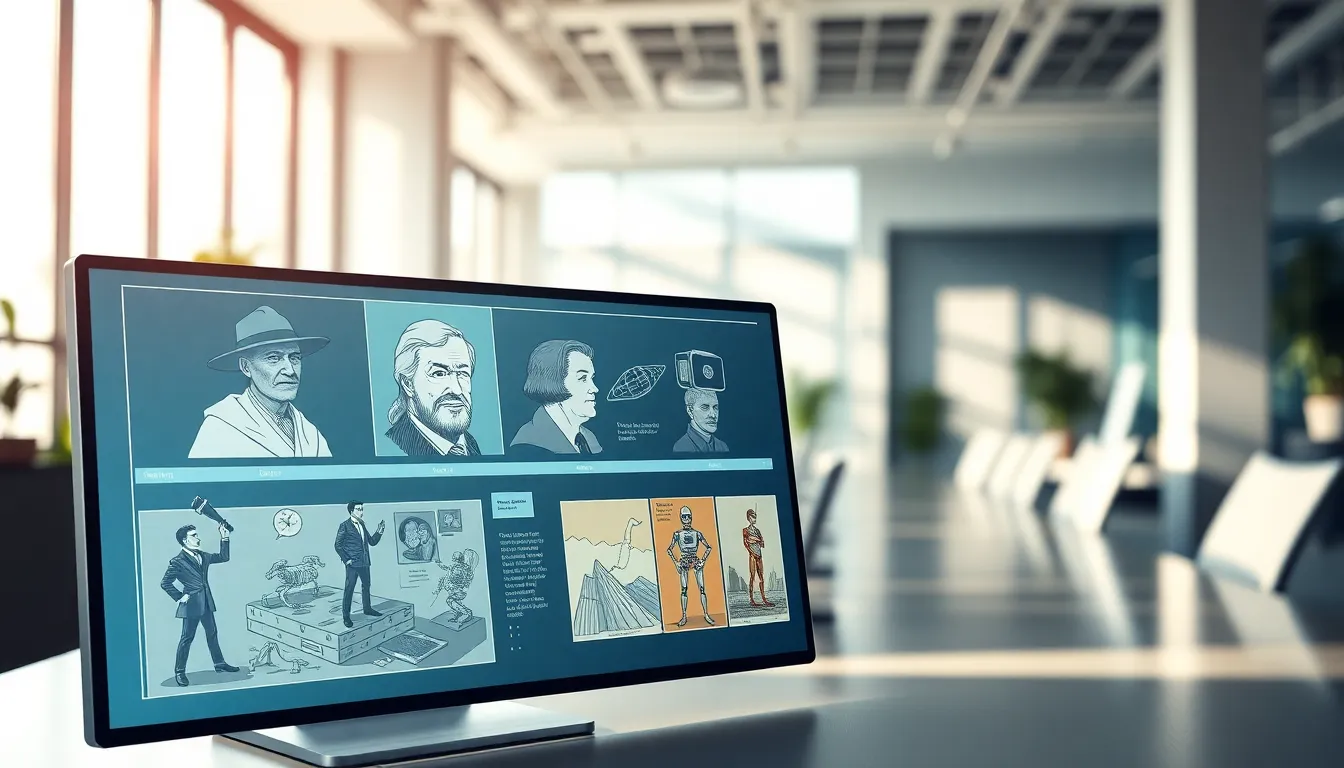
Futurism isn’t just a modern buzzword: it has roots that investigate deep into history. From the ancient Greek philosophers to the 20th-century visionaries, the quest to foresee the future has been driven by curiosity and a desire for innovation. In fact, the term ‘futurism’ emerged in the early 1900s, encapsulating a movement that embraced modern technology and redefined art.
In the 1950s, futurists began using scientific methods to make predictions about the future, combining sociology, economics, and technology with a hefty dose of imagination. Their forecasts ranged from realistic to downright whimsical. Consider the perspectives of these pioneers, they weren’t just daydreaming: they were laying the groundwork for societal evolution. How quaint it seems now, doesn’t it?
As we traverse through the ages, we’ll see how these early predictions influence our current understanding of what the future holds. Some of their visions may have turned into reality, while others might have left us scratching our heads in confusion.
Famous Predictions From Notable Figures
Throughout history, several figures have made headlines with their bold predictions. For instance, in 1943, Thomas Watson, then Chairman of IBM, famously said, “I think there is a world market for maybe five computers.” Fast forward to today, and we can hardly find a household without multiple computing devices.
Then, there’s the notorious prediction by media mogul Ken Olsen in 1977 when he stated, “There is no reason for any individual to have a computer in their home.” One can only imagine his reaction upon seeing the smart devices that accompany us everywhere nowadays.
Other noteworthy predictions came from science fiction authors like Arthur C. Clarke, who suggested that satellites could revolutionize communication. Keep in mind, though, that while some of these figures missed the mark by a long shot, others laid the foundation for technological advancements we cherish today.
Technological Predictions That Came True
While some predictions flopped, others dazzled with their accuracy. Consider the early predictions of the Internet’s potential. It was in the 1960s when computer scientist J.C.R. Licklider envisioned an ‘Intergalactic Network’, long before the World Wide Web was even conceptualized. Who would have thought that something ludicrous at the time would transform communication worldwide?
Another striking example is the prediction of wearable technology. In 1961, the futurist and writer Isaac Asimov speculated that we would one day wear gadgets to see information instantly. Today, smartwatches and fitness trackers are part of our daily wardrobe.
These moments remind us that, while some predictions felt like science fiction, a handful changed the world, proving that visionaries sometimes strike gold.
The Role Of Science Fiction In Shaping Expectations
Science fiction has played a pivotal role in shaping society’s expectations of what the future could hold. Works by authors like H.G. Wells and Isaac Asimov opened the door to imaginative possibility, often detailing advanced technologies long before they graced our reality. The iconic story of flying cars, robots, and intergalactic travel was inspired by their prose.
Movies and novels set our imaginations ablaze with a sense of wonder. For example, Netflix’s dystopian series ‘Black Mirror’ forces audiences to confront what potential futures could be if technology spiraled out of control. Science fiction pushes boundaries, inspiring innovators and fueling discussions about ethics and technology. It encourages not only dreams of the future but also warns us about where we might be heading.
Predictions That Missed The Mark
On the flip side, many predictions fell flat, leaving us in stitches at their audacity. In 1957, the Soviet Union’s Leonid Brezhnev claimed that by the year 2000, citizens would be living the dream of leisure, free from labor due to technological advancements. Fast forward to today, and it seems we haven’t quite cracked that particular code.
Equally amusing is the 1970s prediction that by the year 2000, we would be exploring other planets as casually as packing for a weekend getaway. As red as our cheeks may be for missing those space-vacation opportunities, we’re still working on reaching Mars while figuring out how to coexist on Earth.
These humorous misfires serve as reminders that, while predictions can be fun, they carry a substantial risk of missing the mark.
Lessons Learned From Historical Predictions
Reflecting on past predictions reveals invaluable lessons. History teaches us that human ingenuity thrives on imagination, but it should also be tempered with caution. Many visionaries operated from limited knowledge, causing predictions to miss the nuances of real-world complexities.
An important takeaway lies in recognizing the balanced approach between optimism and realism in forecasting. Today, while we explore cutting-edge technologies like AI and quantum computing, it’s crucial to remain grounded. Understanding the failures of our predecessors allows for wiser decision-making in navigating the uncertainties of the future.
In essence, let curiosity drive discovery while a sense of skepticism sharpens our foresight.
Looking Ahead: What Can We Learn For The Future?
Gazing into the crystal ball of the future offers boundless opportunities, but how do we translate past missteps into actionable insights? Embracing an adaptive mindset is vital. We should welcome innovation while remaining discerning of its implications.
Also, the collaborative effort across disciplines enables a richer tapestry of ideas. The fusion of technology with art, ethics, and cultural understanding will help pave the way for responsible advancement. Visionaries today must engage in open dialogues about the potential outcomes of new technologies while considering their societal impact.
By synthesizing creativity and critique, we can position ourselves for a future replete with promise, learning from those who dared to predict the unpredictable.